
Convergence Insufficiency: The Most Misunderstood Academic Barrier

Every day, countless bright students struggle silently in classrooms. They have 20/20 eyesight, pass routine eye screenings, have great decoding abilities and are often making great grades. Yet reading remains an exhausting battle that leaves them frustrated, their parents clueless about why their child is seemingly struggling so much yet their teachers say they're doing fine, and they often go misdiagnosed when their parents bring them to various doctors. The likely common culprit? A condition affecting up to one in twelve children called: Convergence Insufficiency.
The Hidden Vision Problem
Convergence Insufficiency (CI) is a binocular vision disorder where the eyes struggle to work together when focusing on near objects. Unlike problems with visual acuity, CI is fundamentally an eye-teaming, binocular coordination, issue. When reading, one eye tends to drift outwards, making it difficult to maintain the single, clear image necessary for sustained near work.
The symptoms are painfully familiar to teachers: students who lose their place while reading, are slow readers, struggle with comprehension despite obvious intelligence, and show declining concentration after just 10-20 minutes of near work. These children often rub their eyes excessively, squint, or even close one eye while reading. They may complain of headaches, double vision, or report that words seem to "jump" or "swim" on the page.
The ADHD Connection
Research has documented a three-fold greater incidence of ADHD diagnoses among children with CI compared to the general population. The overlap in symptoms is striking: both conditions involve difficulty concentrating on near tasks, performance difficulties with reading, frustration, and task avoidance.
The physical effort required to maintain single vision during reading consumes cognitive resources that would otherwise support attention and executive function. Studies show that experimentally induced visual stress reduces performance on tests measuring inhibition and executive function. In essence, these children are working so hard just to see clearly that they have little mental energy left for comprehension or sustained attention.
Perhaps most troubling: research indicates that approximately 77% of patients diagnosed with both CI and ADHD were already on ADHD medication when their vision problem was finally identified. How many children are being medicated for attention deficits when an undetected vision problem could explain their struggles? One, two, three...?
Why Are Professionals Missing This?
Despite affecting millions of children across the world and being backed by over a decade of rigorous research funded by the National Eye Institute, convergence insufficiency remains largely overlooked in both educational and medical settings. There are several reasons for this disconnect:
- Standard screenings don't detect it. The typical 20/20 eye chart test measures only distance visual acuity, not eye coordination. A child can have perfect eyesight and severe CI.
- Many eye care providers don't test for it. Comprehensive binocular vision assessment requires specific testing beyond routine eye exams, and not all practitioners include these evaluations.
- The symptoms mimic other conditions. Teachers and parents often attribute CI symptoms to laziness, lack of motivation, or learning disabilities rather than a treatable vision problem.
- Professional inconsistency. While organizations like the Optometric Vision Development Rehabilitation Association provide the most up-to-date guidance on diagnosing and treating CI, it's a small organization whereas other, larger organizations (such as the American Academy of Ophthalmology) continue to promote outdated or ineffective approaches, creating confusion among practitioners and parents.
The Academic Impact
The consequences of undetected CI are profound. Research shows that children with CI are three times more likely to be in the bottom 25% of their class. They demonstrate reduced reading efficiency, poor handwriting, difficulty copying from the board, and lower math performance due to alignment problems with numbers.
These are not children lacking intelligence or effort. They are students whose visual system cannot support the demands of sustained near work, creating an invisible barrier to academic success. Without proper identification and treatment, many abandon hope of pursuing careers involving sustained reading or desk work, limiting their potential based on a highly treatable condition.
The Solution Exists
The good news is that CI responds remarkably well to treatment. The Convergence Insufficiency Treatment Trial, a large NIH-funded study, established that office-based vision therapy combined with home reinforcement successfully treats CI in nearly 75% of children. These improvements are maintained long-term, with 89% of participants showing sustained benefits at one-year follow-up. More recently, researchers have begun using fMRIs to show how the brain changes after doing office-based vision therapy, and many of these newer studies are done on adults, showing how neuroplasticity is effective throughout one's life.
Treatment involves supervised in-office sessions with a trained vision therapist supplemented by prescribed home exercises. The process strengthens the eye-teaming neural networks, ultimately permitting people, both children and adults, to read comfortably and efficiently, often for the first time in their lives.
A Call to Action
Anyone struggling with reading, attention, or academic performance deserves a comprehensive binocular vision evaluation before being labeled with learning disabilities or prescribed medication for ADHD.
For educators, the key question to ask struggling readers is simple: "Do you ever see words come apart or go doubled when you read?" This single question can reveal what standard screenings miss.
As we work to close achievement gaps and support struggling learners, we cannot afford to overlook one of the most common and treatable barriers to academic success. It's time to bring Convergence Insufficiency out of the shadows and into every conversation about reading difficulties and attention problems in our schools.
The research is clear. The treatment is proven. The only question remaining is: how many more children will struggle needlessly before we make comprehensive binocular vision assessments a standard component of a child's educational evaluation?
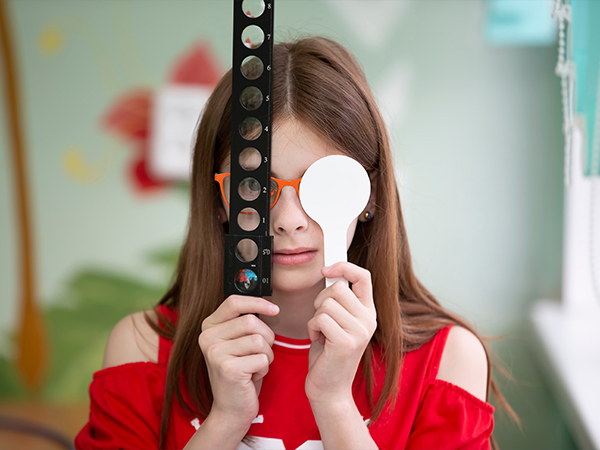
Conditions We Treat
If you or your child is experiencing any symptoms that lead you to think that your struggles are visual in nature, it's important to take action and seek treatment as soon as possible.
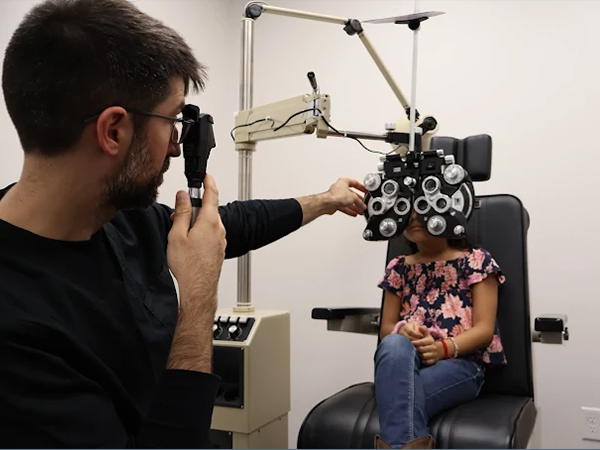
Keep In Touch
Don't wait – contact us today to schedule an appointment and take the necessary steps towards improving your vision and your performance!
Contact Info
Hours of Operation
- Monday 9:00 AM - 6:00 PM
- Tuesday 9:00 AM - 6:00 PM
- Wednesday 9:00 AM - 6:00 PM
- Thursday 9:00 AM - 6:00 PM
- Friday 9:00 AM - 6:00 PM
- Saturday Closed
- Sunday Closed
- Monday
- Tuesday
- Wednesday
- Thursday
- Friday
- Saturday
- Sunday
- Monday
- Tuesday
- Wednesday
- Thursday
- Friday
- Saturday
- Sunday
© 2026 Texas Vision Therapy. All rights Reserved -
Accessibility Statement
-
Privacy Policy
-
Sitemap
Managed and Designed by 